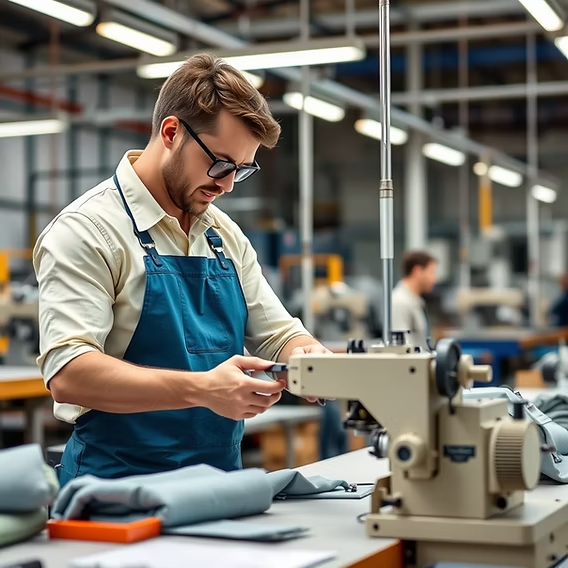
How to Start a Perfit Clothing Brand with Low Budget
Posted on Jun 28, 2026 | By Perfit Company
Most people think starting a clothing brand requires a large investment. They assume you need hundreds of thousands of dollars in venture capital to pay for massive industrial storage spaces, hire a large corporate team, and fund enormous production runs before ever making a single sale. However, with the right approach, you can launch a successful Perfit clothing line with a minimal budget.
The modern digital landscape and revolutionized supply chains have democratized the fashion industry. Today, a solo entrepreneur working from a bedroom can design, launch, and scale a highly profitable clothing label that competes directly with heritage retail brands. The barrier to entry has shifted from capital to strategy; if you understand how to deploy a lean business model, manage your cash flow aggressively, and target an audience with surgical precision, your budget constraints can actually become your greatest competitive advantage.
Starting a brand used to require massive capital. In the traditional apparel business paradigm, factories demanded minimum order quantities (MOQs) of 500 to 1,000 pieces per style, color, and size window. For a new startup trying to launch a simple collection of three designs across four standard sizes, this meant committing to thousands of individual units blindly. If the market didn't respond to the designs, the founder was left with a garage full of dead inventory and a bankrupt business. But times have changed. At the Perfit company, we support startups with an MOQ of just 25 pieces. This shift allows you to preserve your working capital for what matters most in the early days: testing the market and acquiring customers.
Step 1: Niche Down and the "Hero Product" Strategy
Don't try to sell everyone everything. One of the quickest ways to burn through a small budget is trying to launch a full-scale, multi-category fashion line right out of the gate. If your initial drop includes t-shirts, hoodies, cargo pants, hats, and socks, your capital will be completely drained across multiple manufacturing setups, fabric types, and patterns.
Instead, start with one hero product. Whether you are designing heavyweight oversized hoodies or a custom Perfit dress, building a loyal audience around one perfect product is easier and far more cost-effective than launching a disjointed 20-piece collection.
Think of some of the biggest modern direct-to-consumer fashion brands today; many of them started by perfecting a single item—like the ultimate white t-shirt, the perfect pair of swim trunks, or engineered athletic tights. By focusing all your energy on a single hero product, you can ensure its construction quality is immaculate, keep your pattern-making costs low, and create a highly clear, hyper-focused marketing message that tells consumers exactly why your specific product is superior to anything else on the market. Once your hero product generates consistent cash flow and a loyal community, you can naturally use those profits to fund the development of secondary garments.
Step 2: Design with Production in Mind
Design is the most important aspect of creating a successful clothing brand. However, true design in the fashion industry isn't just about drawing pretty sketches on an iPad. When designing, consider the production process and the materials needed to bring your vision to life. If your designs feature overly complex fabric paneling, contrast stitching, custom metal zippers on every seam, and multiple embroidery placements, your manufacturing costs will skyrocket, instantly pricing you out of a low-budget strategy.
Don't overlook the importance of functionality and comfort in your designs. A garment can look visually stunning on a screen, but if the fabric scratches the skin, if the armholes are too tight, or if it loses its shape after a single run through a washing machine, your return rates will destroy your margins.
Look for what your audience wants and needs, and fully consider the production implications of your design choices. If you are targeting a streetwear niche, focus heavily on the silhouette and fabric weight (such as a premium 360 GSM cotton fleece) rather than intricate, expensive hardware. A clean, beautifully cut garment made from exceptional material will always outperform a poorly constructed item over-saturated with cheap design gimmicks.
To protect your budget, build a continuous feedback loop into your design phase. Don't just make a design and instantly give it to production, but instead use your social media to ask your audience for feedback, and then make the final design and then give it to production. Post digital mockups or tech sketch options on your Instagram Stories or TikTok feeds. Ask your followers: "Which colorway do you prefer?" or "Would you rather have this hoodie cropped or standard length?" This interactive process does two things simultaneously: it gives you free market research to ensure you only manufacture what people actually intend to buy, and it builds immense pre-launch hype, making your audience feel like co-creators of your brand.
Step 3: Mastering the Tech Pack
To get an accurate quote from a professional factory, you need a tech pack. This document tells us the exact measurements, fabric type (e.g., French Terry or Nylon-Spandex), hardware specs, and print locations. Many amateur founders try to approach industrial manufacturers with basic photographs of other brands' clothes or loose hand sketches. This is a massive mistake that wastes both your time and your budget. Without a tech pack, a factory can only guess your specifications, which leads to wildly inaccurate cost estimates and prototypes that look nothing like your original concept, forcing you to pay for multiple rounds of expensive corrective sampling.
Your tech pack serves as the master contract for your production. It specifies the exact stitch type, the weight of the fabric in GSM, the Pantone codes for color accuracy, and the strict size grading rules for your entire size run. If you don't have one or lack the technical background to create vector files, our in-house design team can help you build it from scratch. Investing the time to lock down an absolute, flawless tech pack ensures that your initial physical sample arrives exactly as intended, saving you hundreds of dollars in pre-production adjustments and keeping your timeline firmly on track.
Step 4: Start Small, Scale Fast
The legacy retail system is dead. You no longer need to place massive, risky bets on large inventory orders to build a presence in the apparel market. With our low MOQ, you can test the market with just 25 pieces. This low-risk approach completely changes the game for low-budget startups. Instead of sinking your entire life savings into thousands of units, you can fund a micro-batch run for a fraction of the price.
Use social media to gauge interest, gather feedback, and generate your initial wave of sales. Treat your first 25 pieces as a paid proof-of-concept. When you launch a micro-drop, you create natural, organic scarcity. Selling out 25 hoodies is significantly easier than selling out 500, and it establishes immediate social proof for your brand. Once you find a winning product and prove that your target demographic is willing to pay your retail price, you can quickly scale up production without worrying about excess inventory or tying up your capital in unsold stock. You pull data from the market, reinvest your revenue immediately, and let your customers fund your next, larger bulk production run.
Step 5: Build a Strong Brand Identity on a Shoestring Budget
Consistency in your brand messaging, visual elements, and customer experience is crucial for long-term success. Many founders mistake branding for an expensive logo design or premium billboard advertising. In reality, branding is how your audience feels when they interact with your digital presence. It is your tone of voice, your brand values, and the narrative behind why you started the label. Invest in a strong brand identity that resonates with your target audience deeply.
You don't need to hire an expensive creative agency to establish a world-class visual identity. Use clean, minimalist typography, curate a cohesive color palette that reflects your niche, and stay absolutely consistent across your website, packaging inserts, and social channels. If your brand stands for sustainable luxury streetwear, ensure your messaging consistently reinforces that perspective across every touchpoint. A clear, authentic narrative costs nothing to create, but it builds the premium perceived value required to command high retail margins.
Step 6: Leverage Organic Social Media for Zero-Dollar Marketing
When operating on a tight budget, you cannot afford to waste capital on expensive paid advertising campaigns on Google or Meta. Instead, your growth engine must rely entirely on organic social media marketing. Platforms like TikTok, Instagram Reels, and YouTube Shorts use powerful interest-based algorithms that can push your content to millions of potential customers for free—regardless of your follower count.
Use social media platforms to showcase your products, engage with your audience, and build a community around your brand. This can help drive sales and create brand loyalty. The key to organic growth is content volume and authenticity. Don't just post polished, corporate commercials. Modern consumers, especially Gen Z and Millennials, see right through corporate advertising. Instead, show the raw, behind-the-scenes journey of building your apparel startup. Document your fabric sourcing process, film your reaction when opening your first factory sample, and explain the meaning behind your graphic prints.
Use trending sounds, trending videos to do some marketing keep posting stuff. Analyze what type of content is currently going viral within the fashion niche and adapt those formats to your own brand voice. If a specific transition video format is trending, use it to showcase your hero product. Post consistently—at least once or twice a day—to maximize your algorithmic reach. Remember, one single viral video can completely sell out your entire low-MOQ inventory overnight, turning a zero-dollar content strategy into thousands of dollars in revenue.
Step 7: Partner with the Right Manufacturer
Finding a reliable manufacturer is key to your brand's success. Your supply chain is the single most critical asset in your business operation; if your factory delivers poor sewing quality, incorrect sizing, or misses your delivery deadlines, your brand will fail before it ever truly begins. Many low-budget founders make the mistake of searching for the absolute cheapest price per unit on unverified forums, leaving themselves completely vulnerable to scams and defective production runs.
At Perfit, we offer high-quality manufacturing services with a low MOQ, allowing you to focus on growing your brand without worrying about production issues. We bridge the gap between industrial-grade capabilities and startup-friendly access. By partnering with a factory that provides transparent communication, rigorous inline quality control, and scalable production infrastructure, you secure peace of mind. You don't have to worry about whether your seams will tear or your fabrics will warp; you can channel 100% of your energy into building community and driving traffic to your store.
Step 8: Conversion Optimization and Lean E-Commerce Infrastructure
Once you have captured attention through organic social media content, you must ensure your digital storefront is fully optimized to convert that attention into revenue. Developing a comprehensive marketing strategy to promote your brand and products doesn't mean spending money recklessly; it means maximizing the efficiency of your digital touchpoints. Utilize digital marketing channels, content creation, and influencer partnerships to reach your target audience effectively. Seeding your 25 micro-batch units to hyper-targeted, micro-influencers in exchange for honest content is an exceptionally high-ROI strategy for lean budgets.
Make your website user-friendly and easy to navigate. You do not need to spend thousands of dollars on a custom web developer. Use clean, highly optimized platforms like Shopify or highly customizable blogging frameworks to build your store. Ensure your loading speeds are lightning-fast, your product photography is completely crisp and clear, and your checkout process is seamless. If a potential customer has to jump through multiple hoops, deal with broken layout links, or fill out endless forms to buy a shirt, they will abandon their cart immediately. Your product descriptions should be compelling, detailing the fabric weight, fit parameters, and sizing recommendations explicitly to eliminate friction.
The Last and Most Important Step: Fostering Lifetime Community Velocity
The launch is just the beginning. To keep a low-budget brand alive, you must generate high customer retention rates, turning one-time buyers into lifetime brand advocates. Keep your audience engaged with some viral hooks, giveaways, and interactive content. Host community challenges or exclusive giveaways where your followers can win a piece from your upcoming drop by tagging their friends or sharing your content. This generates immense word-of-mouth marketing for a negligible cost.
Building a successful clothing brand takes time and effort, but with the right strategy and support, you can achieve your goals. Don't let a lack of capital stop you from pursuing your creative ambitions. By starting small, prioritizing quality, leveraging organic social media, and protecting your cash flow through micro-MOQ production runs, you can systematically build a lasting legacy in the fashion industry. At Perfit, we are here to help you every step of the way, from design to production. Start your journey today and turn your vision into reality.
Want to start your journey?
Contact us today.
Cut & Sew vs. Print on Demand: Which Is Best for Your Brand?
Posted on Jun 28, 2026 | By Perfit Company
When launching a Perfit clothing line, founders usually face two fundamental fulfillment choices: Print on Demand (POD) or Custom Cut & Sew Manufacturing. For an early-stage entrepreneur, this decision dictates your entire business model, upfront capital requirements, scaling capabilities, and creative freedom. While POD offers a zero-inventory barrier to entry, it severely limits your brand's growth, design flexibility, and long-term profit margins.
In contrast, custom cut-and-sew manufacturing requires more intentional upfront planning and an investment in raw materials, but it gives your brand full control over your aesthetic and supply chain. Many entrepreneurs fall into the trap of using POD because it seems safe, only to find themselves completely unable to compete in a saturated e-commerce market where consumers judge a brand by its custom fit, material thickness, and unique finishing details. Let's break down the mechanics of both fulfillment models so you can make the right strategic decision for your label.
The Limitations of Print on Demand (POD)
With POD, you are buying pre-made, generic blank Perfit clothes and simply printing a digital graphic or logo on top of them. The item doesn't actually exist until a customer places an order on your website, at which point a third-party fulfillment center prints the graphic and dropships the garment to the buyer. While this eliminates the risk of holding dead inventory, it cripples your ability to build a genuine fashion brand.
The most glaring drawback of POD is the complete lack of creative control. You cannot change the fit, adjust the hemline, choose a specific structural drape, or add custom woven neck labels easily. You are completely restricted to the off-the-shelf blanks provided by fulfillment catalogs—meaning your brand's premium hoodie is structurally identical to hundreds of other stores selling the exact same blank online.
Furthermore, the base cost per unit is exceptionally high, eating directly into your profit. Because you are buying one single item at a time from a fulfillment middleman, you lose all economies of scale. A basic printed blank hoodie can easily cost you $25 to $30 before shipping. Once you add marketing and customer acquisition costs, your margins vanish entirely, making it nearly impossible to run profitable paid ad campaigns on platforms like Meta or TikTok.
The Power of Custom Cut & Sew Manufacturing
Cut and sew means the garment is built entirely from scratch, transforming raw fabric rolls into custom, proprietary silhouettes. Instead of working around the limitations of an existing blank, you write the blueprint for the entire product. You choose the exact fabric blend (such as 100% combed cotton or organic French terry), the precise yarn weight in GSM, the custom garment-dyeing or vintage washing processes, and the exact fit measurements (like an exaggerated drop-shoulder or a cropped waistline).
This is how luxury, premium athleisure, and dominant streetwear brands are built. When a consumer opens a package from a cut-and-sew brand, they immediately notice the difference: the architectural drape of heavy-density knit fabric, the custom branded metal aglets on the drawstrings, the seamless interior stitching, and the personalized neck branding. These technical, proprietary details allow you to command a premium retail price point (often $80 to $120+ for a hoodie) while enjoying significantly lower manufacturing costs per unit achieved through bulk purchasing.
Side-by-Side: Sourcing and Fulfillment Mechanics
To clearly visualize how these two frameworks impact your day-to-day operations and growth potential, consider how they stack up across key business metrics:
| Metric |
Print on Demand (POD) |
Custom Cut & Sew |
| Upfront Cost |
Near zero; pay only when you make a sale. |
Requires a deposit for patterns, sampling, and bulk runs. |
| Design Limits |
Restricted to basic flat surface graphic prints on standard blanks. |
Unlimited; custom fits, fabric textures, unique hardware, and washes. |
| Profit Margins |
Very low (typically 15% to 25%) due to high unit base costs. |
High (typically 60% to 80%) through wholesale bulk production. |
| Brand Value |
Low perceived value; easily duplicated merchandise model. |
High perceived value; proprietary fits build high community loyalty. |
Making the Strategic Choice for Your Apparel Business
If your primary goal is simply to test out a graphic design concept, sell simple merchandise for a personal blog, or run a casual side-hustle with no financial risk, Print on Demand serves that purpose well. It acts as an introductory sandbox for learning basic e-commerce logistics and digital marketing.
However, if you want to build a real, legacy fashion brand that commands industry respect, attracts high-end wholesale retail buyers, and generates sustainable wealth, cut-and-sew is the only viable path forward. Consumers will not stay loyal to a brand that charges premium prices for standard wholesale blanks they can find elsewhere. They stay loyal to labels that engineer signature garments that fit better than anything else in their wardrobe.
Historically, the biggest barrier preventing emerging designers from entering the cut-and-sew space was the astronomical Minimum Order Quantity (MOQ) demanded by industrial factories—often requiring 500 to 1,000 units per style, color, and size. This forced startups to take on massive financial risks before ever testing their market.
Thankfully, modern manufacturing networks have evolved to support the creator economy. Through the official Perfit website, we solve this bottleneck by offering full cut-and-sew services with an industry-low MOQ of just 25 pieces per design. This revolutionary operational framework gives you the creative power, custom fabric sourcing, and premium finishing options of a major global fashion house—without forcing you to take on massive, crushing upfront costs or unmanageable inventory volumes.
Conclusion: Move Beyond Merchandise
The choice between Print on Demand and Cut & Sew is ultimately a choice between building a merchandise business or building an apparel brand. POD keeps you safe from inventory risks but locks you in a cage of low profit margins, generic fits, and high customer turnover. Cut & Sew demands an investment in technical preparation and precise planning, but it rewards you with high asset value, elite quality control, healthy gross margins, and a product that stands out proudly on social media feeds and retail racks.
Stop settling for generic templates and standard catalog blanks. It's time to take complete control of your creative vision, give your audience the heavy-weight fabrics and custom fits they crave, and maximize your profitability. Visit our official channels today to see how our low-MOQ cut-and-sew solutions can help you smoothly transition away from POD and lay down a solid, premium foundation for your clothing brand's long-term growth.
If you are ready to take your brand to the next level, you can contact us via our social media platforms or submit a design request through the official Perfit website. Let's build your custom clothing line from the thread up.
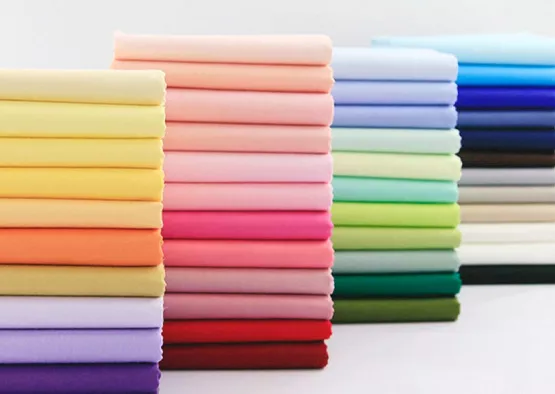
Choosing the Best Fabrics for High-Performance Gymwear
Posted on Feb 22, 2026 | By Perfit Company
Not all spandex is created equal. If you are launching an activewear brand, the fabric you select will define your product's success—long before a customer ever notices your logo or marketing campaigns. The modern fitness consumer is highly educated; they demand fitness apparel and Perfit dresses that are genuinely squat-proof, highly breathable, and engineered for intense moisture-wicking.
Unfortunately, many emerging brand owners make the fatal mistake of choosing their fabrics based entirely on a quick touch test or the lowest unit price from a supplier. They approve a soft-feeling prototype, only to find out months later that their bulk order pills after one wash, sags at the knees during a workout, or becomes entirely see-through at the bottom of a squat.
To build a respected, high-performance athletic brand, you must understand the textile science behind the garments. Whether you are developing lightweight running tops, heavy-duty compression tights, or athleisure wear for everyday use, the core decision always starts with understanding the properties of synthetic fibers. In this comprehensive guide, we will break down the exact differences between the industry's most popular materials, how to select the correct fabric weight, and how to engineer garments that actually perform under pressure.
The Science of "Moisture-Wicking"
Before comparing specific materials, we must define what "moisture-wicking" actually means. It is often used as a marketing buzzword, but in textile manufacturing, it describes a very specific physical mechanism. A true moisture-wicking fabric operates via capillary action—it draws sweat away from the skin and pushes it to the outer surface of the garment, spreading it across a wide area so it can evaporate rapidly.
This is why 100% cotton is rarely used in high-performance gymwear. Cotton is hydrophilic; it absorbs sweat and holds onto it, staying wet and heavy. This leads to severe chafing, bacterial growth, and a clinging, uncomfortable fit. To achieve a dry, lightweight feel during a workout, performance apparel relies almost exclusively on synthetic, hydrophobic (water-repelling) fiber bases—primarily polyester and nylon.
Nylon vs. Polyester Blends: The Core Debate
Most modern activewear fabrics are built on synthetic stretch knit bases, and the most important decision you will make is choosing between a polyester or a nylon foundation. While they may look similar to the untrained eye, they behave very differently under stress, heat, and moisture.
Polyester/Spandex: The High-Intensity Workhorse
Polyester/Spandex: This is the industry standard for performance wear. Polyester is incredibly durable, holds color exceptionally well, and is naturally moisture-wicking. It is hydrophobic, meaning it absorbs virtually zero moisture (only about 0.4% of its weight). Because it pushes moisture to the surface rather than absorbing it, a polyester jersey can dry 10% to 30% faster than a comparable nylon garment.
Polyester also excels in shape stability. It resists stretching, shrinking, and sagging over time, making it highly dependable for athletic gear that takes a beating. Furthermore, if your brand relies on complex, full-color sublimation printing (such as custom team jerseys or vibrant patterned leggings), polyester is mandatory. The sublimation process relies on heat to bond ink to polymers, and it yields excellent, vibrant results on polyester bases, whereas it is generally not recommended for nylon.
Best Use Cases: Polyester is the ultimate choice for high-intensity interval training (HIIT), running, cycling tops, team sports, and any environment where maximum sweat evaporation and shape retention are the top priorities.
Nylon/Spandex: The Premium "Second-Skin"
Nylon/Spandex: Nylon (also known as polyamide) is softer and silkier than polyester. It provides that premium, "second-skin" feel that high-end yoga and boutique fitness brands utilize. While polyester is crisp and utilitarian, nylon offers a luxurious, matte finish that consumers instantly recognize as expensive.
Beyond its feel, nylon is structurally stronger than polyester. With a tensile strength ranging from 800 to 1,200 MPa, it can endure over 50,000 Martindale cycles of abrasion. This superior abrasion resistance makes it incredibly resilient against friction—such as thighs rubbing together during a run or a barbell scraping against the shins. Nylon also offers superior stretch recovery, ensuring your garments snap back to their original shape rather than "bagging out" after a heavy workout.
However, nylon has a slight drawback in extreme heat: it is mildly hygroscopic. It can absorb up to 4% of its weight in moisture. While this creates a comfortable, cooling microclimate against the skin during moderate workouts, it means a nylon garment will take longer to dry than polyester when completely drenched in sweat. It is also generally 20% to 35% more expensive to source than polyester.
Best Use Cases: An 80/20 nylon-spandex blend is considered the gold standard for premium yoga tights, sports bras, seamless leggings, and combat sports rashguards where abrasion resistance, high stretch, and skin comfort are paramount.
The Magic of Elastane (Spandex / Lycra)
Neither polyester nor nylon possess significant natural stretch. To create athletic wear, they must be blended with elastane (commonly known by the generic term spandex or the brand name Lycra). Elastane is never used on its own; it is blended into the base fiber at ratios typically ranging from 5% to 25%.
The percentage of elastane dictates the garment's flexibility and recovery. A standard men's training t-shirt might feature an 88% polyester / 12% elastane blend, providing enough give for weightlifting without clinging too tightly to the torso. Conversely, a high-compression women's legging will often utilize a 75% nylon / 25% elastane blend. This higher elastane content provides firm, uniform compression that supports the muscles, improves blood circulation, and ensures the fabric aggressively recovers its shape after deep stretches.
When sourcing, always specify that you require "4-way stretch" fabric rather than "2-way stretch." 4-way stretch means the fabric expands and recovers both crosswise and lengthwise, which is an absolute necessity for the complex movements of yoga, pilates, and gymnastics.
Fabric Weight (GSM) and Knit Structures
Choosing between nylon and polyester is only half the battle. The weight and construction of the fabric determine whether a garment is transparent or squat-proof. In manufacturing, fabric weight is measured in GSM (Grams per Square Meter).
- Lightweight (160–200 GSM): Ideal for running singlets, breathable mesh panels, and loose-fitting training tees. These fabrics maximize airflow and evaporation but will be semi-transparent if stretched tightly across the body.
- Midweight (200–230 GSM): The sweet spot for versatile athleisure, standard gym shorts, and athletic Perfit kleider (dresses). It provides good coverage while remaining breathable.
- Heavyweight/Compression (230–280+ GSM): Mandatory for squat-proof leggings and firm compression gear.
To guarantee opacity, you must combine a high GSM with the correct knit structure. A standard "jersey" knit is prone to stretching thin. For premium leggings, you should always request an "interlock knit." Interlock is a double-knit construction that creates a denser, thicker fabric with identical smooth surfaces on both sides, effectively preventing the fabric from sheer-out during deep squats.
Natural Performance Alternatives: Bamboo and Merino
While synthetic fibers dominate the market, natural fibers have carved out a highly profitable niche in the premium activewear sector, particularly for brands focused on sustainability.
Merino Wool: Sourced from Merino sheep, this natural fiber is arguably the most advanced performance material found in nature. It offers unparalleled thermoregulation—trapping heat in cold weather while wicking sweat in hot conditions. More importantly, Merino wool secretes lanolin, a natural antimicrobial compound that inhibits the bacterial growth responsible for body odor. This makes it the premier choice for outdoor sports, hiking base layers, and multi-day athletic events where washing garments isn't an option.
Bamboo: Bamboo-derived textiles are gaining massive traction for yoga and low-impact studio wear. Bamboo offers natural moisture-wicking properties, extreme softness that rivals silk, and built-in UV protection. While it lacks the sheer durability and shape retention of nylon-spandex, it is highly sought after by eco-conscious consumers looking for comfortable, sustainable loungewear and light activewear.
Practical Application: Choosing the Right Fabric for Your Brand
How do you apply all of this technical data to your next production run? Use this simple framework to dictate your sourcing strategy:
- If you are launching a premium Women's Yoga or Pilates brand: Prioritize an 80/20 Nylon-Spandex blend at a weight of 220-240 GSM using an interlock knit. You are paying a premium for the buttery-soft hand feel, incredible 4-way stretch, and squat-proof opacity that this demographic demands.
- If you are launching a Men's HIIT, CrossFit, or Teamwear brand: Opt for an 85/15 Polyester-Spandex blend at a weight of 190-220 GSM. You need maximum abrasion resistance against barbell knurling, rapid moisture evaporation for heavy sweat, and shape stability.
- If you are launching an Outdoor or Winter athletic line: Request brushed fabrics. A "brushed" nylon-spandex or polyester fleece (around 240-280 GSM) has been mechanically altered on the inside to create a soft, fleece-like texture that traps body heat while still offering synthetic stretch.
Conclusion
Building a high-performance activewear brand requires precision at the foundational level. The differences between nylon and polyester, the ratio of elastane, and the specific knit structure will dictate the lifespan, comfort, and retail value of your clothing. If your garments pill after a week or turn transparent under gym lighting, no amount of clever marketing will secure repeat customers.
Whether you are designing seamless sports bras, high-compression leggings, moisture-wicking running tops, or athletic Perfit kleider (dresses), you need a manufacturing partner who understands textile engineering. Our sourcing team at Perfit Industry can help you navigate these complex choices, offering access to premium mills and ensuring you select the exact blend to match your brand's quality standards. Stop guessing with your supply chain. Contact Perfit Industry today to start developing your custom performance fabrics and build activewear that truly performs.
Global Trends for 2026: Sourcing for the US and EU Markets
Posted on Jun 28, 2026 | By Perfit Company
The global apparel landscape moves fast, and consumer expectations are evolving at an unprecedented rate. For brands looking to capture highly lucrative audiences in the United States, the United Kingdom, and across Europe, relying on outdated silhouettes and legacy manufacturing techniques is a quick way to lose momentum. In 2026, breaking into Western markets requires more than just running targeted social media ads; it requires a fundamental understanding of what modern consumers physically want to wear. The days of mass-producing generic, lightweight garments and hoping for high conversion rates are officially over.
Today's consumers in the US and EU are highly educated about garment construction. They read care labels, they understand fabric weight, and they demand a specific structural drape that cannot be achieved with cheap manufacturing. If your brand wants to command premium retail prices in New York, London, or Berlin, your supply chain must be capable of executing complex technical patterns, specialized dye processes, and premium material sourcing.
At Perfit Industry, we monitor these geopolitical and cultural fashion shifts daily to ensure our B2B partners are always ahead of the curve. Here is a deep dive into exactly what top-tier markets are demanding from manufacturers this year, and how you can optimize your sourcing strategy to dominate the US and EU streetwear and sportswear sectors.
1. The Boxy, Cropped Silhouette: The New Standard of Fit
The standard long, slim-fit t-shirt is officially out. For nearly a decade, the "longline" and tailored fits dominated men's and women's casual wear, but European and US markets are now heavily favoring the "boxy crop." This silhouette fundamentally changes how a garment is patterned and graded. A true boxy crop is not just a standard t-shirt that has been cut short; it is a meticulously re-engineered pattern that sits right at the waistline but features extended, dropped shoulders, widened armholes, and an intentionally wider chest.
Why is this trend dominating 2026? It comes down to proportion play and gender-neutral appeal. The boxy crop allows for superior layering, which is a staple of modern streetwear styling in colder climates like the UK and Northern Europe. When a hoodie or t-shirt is cropped at the natural waist, it elongates the wearer's legs and allows the hem of an undershirt to peek out, creating a dynamic, multi-dimensional outfit. Furthermore, the relaxed drape across the chest offers unparalleled comfort without looking sloppy.
From a manufacturing standpoint, achieving the perfect boxy fit requires expert pattern makers. If the shoulder drop is too severe, the garment limits arm mobility. If the crop is too high, it alienates mainstream consumers. Brands targeting the US and EU must partner with manufacturers who understand these precise micro-measurements. We highly recommend updating your tech packs to reflect a wider chest tolerance and a squared-off hem to meet this massive demand.
2. Heavyweight Materials: Where Weight Equals Luxury
Luxury is now defined by weight. In previous eras, consumers prioritized ultra-soft, thin fabrics. However, modern streetwear brands and high-end athleisure labels are completely abandoning 200 GSM (Grams per Square Meter) cotton in favor of ultra-heavy 300+ GSM to 450 GSM jersey and French terry cotton. When a consumer in the US or EU purchases a premium garment, their first instinct is to feel its heft. In 2026, physical weight is the primary psychological trigger for perceived value and quality.
Heavyweight fabrics do not just feel more expensive; they perform better visually. They provide a structural drape that holds the garment's shape away from the body, reinforcing the boxy silhouettes mentioned above. A lightweight tee will cling and drape poorly, whereas a 350 GSM cotton tee will create a stark, architectural silhouette that looks incredible in street-style photography and social media campaigns.
This demand for structural integrity extends beyond standard streetwear. Whether you are designing oversized graphic tees, crafting a custom Perfit robe for luxury loungewear collections, or producing premium Perfit roupas (apparel) for international sportswear clients, utilizing high-density fabrics is essential. Brands must ensure their manufacturers have access to premium, combed, ring-spun heavyweight cotton yarns, and that their sewing floors are equipped with heavy-duty overlock machines capable of cleanly stitching through multiple layers of dense fabric without needle breakage.
3. Vintage Washes & Distressing: The "Lived-In" Aesthetic
In a market saturated with mass-produced, pristine clothing, consumers are craving authenticity and nostalgia. They want brand-new Perfit clothes that feel thirty years old. The pristine, shiny finish of factory-fresh garments is being replaced by the "lived-in" aesthetic. Heavy enzyme washes, acid washes, ozone fading, and subtle distressing on the cuffs, hems, and collars are highly requested features in our Sialkot factory.
This trend is driven by the booming vintage and thrifting culture in the US and Europe. Consumers want the character, softness, and faded color palettes of a vintage 1990s band tee, but with the modern, updated boxy fits and reliable sizing that thrift stores cannot provide. To achieve this, manufacturers must employ complex garment-dyeing and washing techniques.
Unlike traditional piece-dyeing (where the fabric roll is dyed before being cut), garment dyeing involves cutting and sewing the clothing first, and then dyeing the finished product. This results in beautiful, slightly uneven color distribution, particularly around the seams, giving the garment a perfectly faded, dimensional look. Furthermore, utilizing pumice stone washes or eco-friendly enzyme washes breaks down the rigid fibers of heavyweight cotton, resulting in an incredibly soft hand-feel right out of the packaging. If you are targeting the Western market in 2026, offering a "vintage wash" capsule collection is practically mandatory.
4. The Rise of Gorpcore and Technical Sportswear Crossovers
The line between outdoor performance gear and everyday streetwear has completely vanished. The "Gorpcore" trend (named after "Good Ol' Raisins and Peanuts" trail mix) has solidified itself as a permanent fixture in the EU and US markets. Consumers are demanding highly technical features integrated into their daily wardrobes. They want water-resistant shells, moisture-wicking inner layers, bungee-cord adjusters at the hems, articulated knee darts in their trousers, and waterproof aquaguard zippers.
This presents a unique challenge and opportunity for apparel brands. You can no longer rely solely on basic cotton fleece. Sourcing must now include technical nylons, ripstop fabrics, elastane blends, and DWR (Durable Water Repellent) coatings. For our sportswear and streetwear clients at Perfit Industry, this means precision manufacturing is more important than ever. Taping seams for waterproofing and laser-cutting pockets requires advanced machinery that standard cut-and-sew factories simply do not possess. Brands that can successfully merge the boxy, heavyweight aesthetic of streetwear with the functional materials of technical sportswear will dominate the 2026 market.
5. Sustainability and Ethical Sourcing Requirements
While style trends dictate what consumers want to wear, regulatory trends dictate what you are legally allowed to sell. In 2026, targeting the European Union requires strict adherence to environmental and ethical sourcing standards. With the implementation of the EU Strategy for Sustainable and Circular Textiles, European buyers (both B2B retailers and direct-to-consumer shoppers) are demanding absolute transparency regarding where and how their garments are made.
The US market is closely following suit, with consumers actively boycotting brands associated with unethical labor practices or heavy environmental pollution. "Greenwashing"—making vague claims about being eco-friendly without proof—is aggressively punished by modern consumers. Therefore, your choice of manufacturer is also your choice of brand reputation.
Brands must partner with factories that offer sustainable options, such as GOTS-certified organic cotton, recycled polyester blends, and OEKO-TEX certified non-toxic dyes. Furthermore, ensuring that your production partner pays fair wages, provides safe working conditions, and minimizes water waste during their washing processes is no longer just a moral choice; it is a critical business strategy for entering the US and EU markets successfully.
6. Speed to Market and Global Logistics
Finally, capitalizing on global trends requires a supply chain that can move as fast as the trends themselves. A massive pain point for brands sourcing overseas is the dreaded lead time. If it takes three months to sample a product, two months to manufacture it, and two months to ship it via ocean freight, a trend may have completely died by the time your inventory arrives in your warehouse.
In 2026, speed to market is a massive competitive advantage. Brands need manufacturers who can rapidly prototype using 3D rendering software, drastically reducing the physical sampling timeline. Once bulk production is finished, you need logistics partners that can bypass global port congestion. Perfit Industry partners globally, utilizing established relationships with top-tier courier services like DHL and FedEx to ensure your trending designs reach your warehouses in London, New York, or Berlin in record time. By utilizing express air freight for time-sensitive capsule drops, brands can react to market demands in weeks, not months.
Conclusion: Building a Future-Proof Supply Chain
Successfully penetrating the US and EU apparel markets in 2026 is an exercise in precision. The modern consumer is uncompromising: they demand the architectural drape of heavyweight fabrics, the nuanced fits of cropped and boxy silhouettes, the nostalgic comfort of vintage washes, and the peace of mind that comes with ethical manufacturing. Falling short on even one of these metrics can result in poor sales and damaged brand equity.
To meet these high standards, brands must evolve past treating their manufacturers as mere vendors, and start treating them as strategic partners. You need a factory that understands the subtleties of a 3-inch shoulder drop, the chemical formula for a perfect acid wash, and the logistics required to ship a 5,000-unit order across the globe flawlessly.
If you are ready to elevate your brand's quality and capture the attention of the US and EU markets, you need a manufacturing partner built for the modern era. Contact Perfit Industry today via our social media channels or website to discuss your next tech pack, request samples, and build a supply chain that scales.
The Blueprint: How to Find a Clothing Manufacturer for Your
Startup
Posted on Mar 15, 2026 | By Perfit Company
Roughly 50% of emerging fashion brands fail within their first
five years, and the culprit rarely has to do with poor design.
According to industry supply chain analysts, the most common point
of failure for new apparel startups is production friction—delayed
timelines, inconsistent sizing, and catastrophic quality control
issues. If you are a startup founder with a vision, your most
critical business decision is not your color palette; it is your
supply chain.
Learning exactly how to find a clothing manufacturer is the bridge
between a good idea and a viable business. Without a reliable
production partner, your sketches remain just sketches. But the
manufacturing landscape is notoriously opaque. Directories are
outdated, middlemen disguise themselves as direct factories, and
communication barriers can turn your first production run into a
costly mistake.
In this comprehensive guide, we will break down the exact
framework for sourcing, vetting, and partnering with an apparel
production factory. You will learn how to bypass the middlemen,
the critical questions you must ask before wiring a deposit, the
warning signs of a failing factory, and how to set your brand up
for scalable success.
The Initial Search: How to Find a Clothing Manufacturer That Fits
Your Niche
The first step in your sourcing journey is defining exactly what
you need, because no single factory is the best at everything. A
facility that excels at heavy-weight denim will likely struggle to
produce delicate silk slip dresses. Before you open a single
directory, you need to establish your baseline requirements:
domestic versus overseas production, your target Minimum Order
Quantity (MOQ), and your specific product category.
If you are a completely new startup testing the waters, you might
lean toward domestic manufacturing (if you are based in the US or
Europe). Domestic factories often offer lower MOQs and easier
communication, which is invaluable when you are still refining
your fit and finish. However, the trade off is significantly
higher per unit costs, which can squeeze your margins before you
even launch. Overseas manufacturing particularly in textile hubs
like Asia—offers unparalleled scalability, advanced technical
capabilities, and better margins, provided you have the volume to
meet their MOQs.
When you begin compiling a list of potential partners, avoid
generic Google searches. Instead, utilize industry-specific trade
shows (like Magic or Premiere Vision), Pages on social media like
(Facebook, Instagram, reddit etc.) specialized B2B sourcing
platforms (like Maker's Row, Sqetch, or Alibaba's verified
supplier index), and networking within fashion incubator groups.
Look for manufacturers that explicitly list your product category
as their core competency.
Takeaway: Stop looking for the "best" manufacturer and start
looking for the "right" manufacturer. Define your fabric needs,
volume capabilities, and margin requirements before you start
sending outreach emails.
Vetting Your Apparel Production Factory: Questions You Must Ask
Once you have a shortlist of five to ten potential partners, the
vetting process begins. This is where most founders make their
biggest mistakes. They ask for pricing too early and fail to ask
about capacity, ethics, and infrastructure. A custom clothing
manufacturer is a long-term business partner, and you need to
interview them as rigorously as you would a co-founder.
Start by auditing their experience and operational capacity. Ask
for their standard MOQs, but follow up by asking about their
Maximum Order Quantities. If your brand goes viral on social media
and you suddenly need 10,000 units instead of 500, can they scale
with you, or will they bottleneck your growth?
Next, dive into their sourcing and ethical standards. Ask for
their compliance certifications (such as WRAP, SEDEX, or ISO
9001). According to a recent McKinsey report on the State of
Fashion, consumers are increasingly demanding transparency, and
you cannot build a sustainable brand on a sweatshop foundation.
Finally, clarify the sampling process. How much do they charge for
prototypes? Are sample costs deductible from the final production
run? What is their standard lead time for both sampling and bulk
production? [LINK: Read our complete guide to managing apparel
lead times]. Get everything in writing before you proceed to the
next step.
Takeaway: Never choose a factory based solely on the lowest cost
per unit. Rigorously vet their scalability, ethical compliance,
and sampling protocols to ensure they can grow alongside your
brand.
The Tech Pack: Your Blueprint for Manufacturing Success
You cannot effectively communicate your vision to a factory using
Pinterest boards and rough sketches. The universal language of
apparel manufacturing is the tech pack. If you approach a
high-quality factory without one, they will immediately identify
you as an amateur and may either refuse your business or
overcharge you to compensate for the anticipated communication
headaches.
A tech pack is a comprehensive blueprint of your garment. It
includes flat technical sketches (front, back, and side views),
exact measurements and grading rules for every size you plan to
offer, a detailed Bill of Materials (BOM) listing every component
from the main fabric down to the specific gauge of the zipper, and
construction callouts (like stitch types and seam allowances).
When you provide a factory with a professional tech pack, you
eliminate the guesswork. This drastically reduces the number of
sampling rounds required to get the garment right, saving you
thousands of dollars and months of time. If you do not have the
technical skills to create a tech pack yourself, hire a freelance
technical designer. It is the best return on investment you will
make in the pre-production phase.
Takeaway: Your tech pack is your contract with the factory. The
more detailed and professional your tech pack, the faster and more
accurate your sampling and production phases will be.
Red Flags to Watch for When Figuring Out How to Find a Clothing
Manufacturer
Even with a perfect tech pack and a thorough initial interview,
some factory relationships look great on paper but fail in
practice. Knowing how to spot early warning signs can save your
brand from disastrous production runs. The most glaring red flag
is poor communication during the courting phase. If a factory
takes weeks to reply to an initial inquiry, or if their answers to
direct questions are continually vague, that behavior will only
amplify once they have your deposit.
Another major red flag is a refusal to provide references or show
examples of their previous work. A reputable custom clothing
manufacturer is proud of the brands they produce for. If they
claim to make high-end activewear but cannot send you a single
physical sample of their past work to inspect the stitching and
fabric quality, walk away.
Beware of factories that say "yes" to everything. A seasoned
manufacturer will push back on unrealistic timelines, incompatible
fabric choices, or overly complex construction details that will
inflate your costs. A factory that promises a four-week turnaround
on a highly complex custom garment from scratch is likely
overpromising to win your business, and will inevitably
underdeliver.
Takeaway: Trust your instincts during the sampling phase. Poor
communication, a lack of transparency, and unrealistic promises
are surefire signs that a factory will become a liability rather
than a partner.
Practical Application: Stepping Stones to Your First Production
Run
Understanding the theory of sourcing is important, but applying it
systematically is what gets your product to market. Here is the
exact step-by-step roadmap you should follow to secure your
production partner and execute your first run.
Step 1: The Outreach and NDA Create a standardized outreach email
template. Introduce your brand, state your product category, and
list your target MOQ. Ask if they have capacity for a new client.
Before sending your proprietary designs or tech packs, ask them to
sign a standard Non-Disclosure Agreement (NDA). This protects your
intellectual property.
Step 2: The Blank Sample Audit Before paying for a custom sample,
ask the factory to send you "blanks" or off-the-shelf samples of
garments they have already produced in a similar fabric and style.
This allows you to audit their seam quality, fabric sourcing
capabilities, and finishing techniques for a fraction of the cost
of a custom prototype.
Step 3: The Custom Prototype (Fit Sample) Once you approve their
baseline quality, submit your tech pack and pay for a custom fit
sample. Do not expect this to be perfect on the first try. You are
evaluating how well they follow the tech pack and how effectively
they implement your revision notes.
Step 4: The Size Set and Pre-Production Sample (PP Sample) After
the fit is perfected on your base size (usually a Medium), order a
size set to ensure their grading is accurate across your entire
size run. The final step before bulk production is approving the
PP sample. This is the exact, final version of the garment. Keep
this sample in your office; it is your standard to compare against
when the bulk order arrives.
Step 5: The Contract and Down Payment Never pay 100% upfront. The
industry standard is 30% to 50% upfront to cover raw materials,
with the balance due only after the goods have been completed and
pass a final quality control inspection (often conducted by a
third-party auditor like SGS or Intertek).
CONCLUSION
Mastering how to find a clothing manufacturer requires patience,
technical preparation, and a willingness to ask hard questions.
Your supply chain is the backbone of your fashion startup; an
unreliable factory will constantly hold you back, while a true
manufacturing partner will empower you to scale, innovate, and
meet your customers' demands with confidence.
By defining your needs early, vetting potential partners
rigorously, communicating exclusively through professional tech
packs, and watching for early red flags, you mitigate the massive
risks that sink most early-stage apparel brands. You don't just
need a vendor; you need a manufacturing arm that understands your
vision.
If you are tired of opaque supply chains, missed
deadlines, and inconsistent quality, it is time to upgrade your
production strategy. Partner with Perfit Industry to turn your
tech packs into retail-ready garments, scale your brand without
the operational stress, and build a supply chain you can actually
trust. Contact us today to discuss your next collection.
how clothes are manufactured?
Posted on Mar 15, 2026 | By Perfit Company
Transforming a design from a sketch into a retail-ready garment requires a highly coordinated, industrial workflow. Whether you are running a custom streetwear label or doing large-scale industrial manufacturing, the process strictly follows this chronological path—a mistake in an early step will ruin the final product.
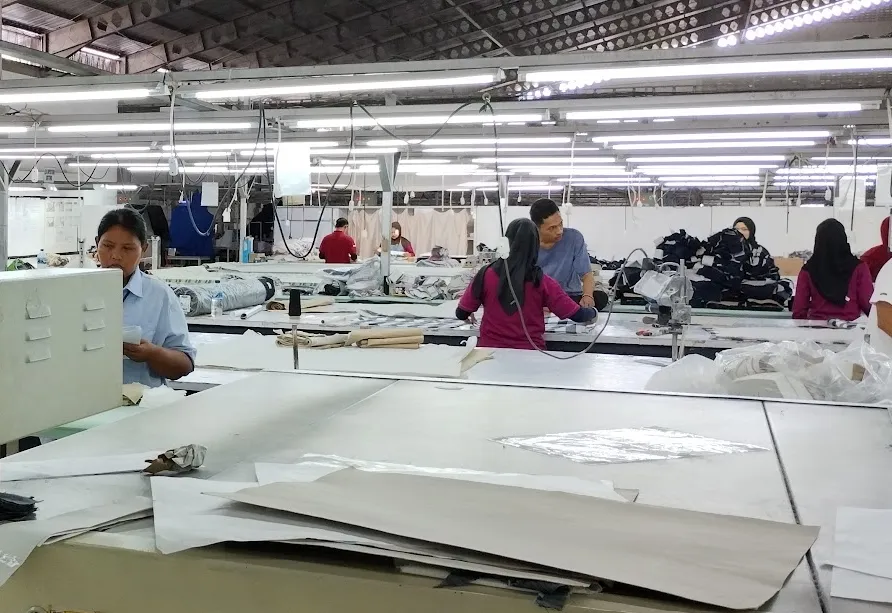
Here is exactly how clothes are manufactured on a production level:
Design & Tech Pack Creation
The blueprint phase
Before any fabric is touched, a technical package (tech pack) is created. This is the contract for the factory. It includes flat technical sketches, exact measurements for every size, and a Bill of Materials (BOM) listing everything from the main fabric down to the specific gauge of the zipper and thread color.
Pattern Making & Grading
A pattern maker translates the 2D sketches into 3D templates (typically using CAD software). Once the base size (e.g., Medium) is finalized, the pattern is "graded"—mathematically scaled up and down to create the templates for the rest of the size run (S, L, XL).
Sampling
The factory produces a prototype (a fit sample). This is reviewed for construction quality, drape, and sizing. Revisions are made to the pattern and tech pack until a Pre-Production (PP) sample is approved. Bulk manufacturing cannot start until this is locked in.
Fabric Preparation & Spreading
Crucial for preventing shrinkage
Fabric arrives in massive rolls. It is first unrolled and allowed to "relax" on long tables for up to 24 hours. This releases the tension from being tightly wound; if fabric is cut while stretched, the final garments will shrink and warp after their first wash. The relaxed fabric is then layered (spread) into stacks up to several inches thick.
Marking & Cutting
A "marker" (a layout mapping out how to fit all the pattern pieces onto the fabric with minimal waste) is printed and laid on top of the fabric stack. Industrial laser cutters or operators using vertical straight-knives slice through dozens of layers of fabric simultaneously.
Sewing & Assembly (CMT)
Cut, Make, Trim
The cut fabric bundles are moved to the sewing floor. Factories typically use a progressive bundle system or an assembly line. Instead of one person sewing a whole shirt, operators perform specific, repetitive tasks—one person only sews collars, another only sets sleeves, and another handles the hems. This maximizes speed and consistency.
Finishing & Quality Control (QC)
The assembled garments move to finishing. Workers trim loose threads, apply hardware (like snap buttons or rivets), and press/iron the garments. Quality control inspectors check for dropped stitches, incorrect measurements, or fabric defects. Finally, the garments are folded, placed in polybags, tagged, and boxed for freight shipping.
How to find Low MOQ and Low price Custom Apparel Manufacturers
Posted on Mar 15, 2026 | By Perfit Company
When searching for custom apparel manufacturers, finding one that
offers low minimum order quantities (MOQs) and competitive pricing
can be challenging. Here are some strategies to help you identify
the right partner for your brand.
1. Research Online Directories
Utilize online directories such as Instagram, Alibaba, Maker's
Row, and ThomasNet to find manufacturers that specialize in low
MOQ production. These platforms allow you to filter results based
on your specific needs.
2. Attend Trade Shows and Industry Events
Trade shows and industry events are excellent opportunities to
connect with manufacturers in person. You can discuss your
requirements directly and assess their capabilities.
3. Network with Other Brands
Reach out to other brands in your industry for recommendations.
Networking can lead you to reliable manufacturers that may not be
widely advertised.
4. Request Samples
Before committing to a manufacturer, request samples of their
work. This allows you to evaluate the quality of their products
and ensure they meet your standards.
5. Negotiate Terms
Don't be afraid to negotiate terms with potential manufacturers.
Discuss your budget and see if they can accommodate your needs
while maintaining quality.
By following these strategies, you can find a custom apparel
manufacturer that offers low MOQs and competitive pricing, helping
your brand grow without breaking the bank.
How Not to Get Scammed by a Clothing Manufacturer
Posted on Jun 28, 2026 | By Perfit Company
When searching for custom apparel manufacturers, it's important to be aware of common scams and how to avoid them. The apparel manufacturing industry is vast and deeply globalized, offering incredible opportunities for brands to scale. However, this global, largely unregulated landscape also attracts bad actors. Every year, countless fashion startups and established brands lose tens of thousands of dollars to fraudulent factories, unauthorized middlemen, and outright scammers.
Falling victim to a manufacturing scam doesn't just mean losing your initial investment; it means losing months of valuable time, missing seasonal launch windows, and potentially destroying the trust you have built with your customers. Knowing how to separate reliable production partners from opportunistic scammers is the most critical skill a clothing brand owner can develop. Before you wire a single dollar or share your proprietary tech packs, here are the absolute biggest red flags to watch out for—and the exact protocols you must follow to protect your business.
The Financial Trap: Asking for 100% Upfront Payment
In the world of B2B apparel manufacturing, cash flow is carefully managed through structured payment terms. If a manufacturer is asking for full 100% upfront payment before any work has begun, you should immediately walk away. This is the most common hallmark of a hit-and-run scam. Once the money is wired, the "factory" simply disappears, stops responding to emails, and deletes their online profiles.
Legitimate factories operate on split payment milestones. The industry standard is typically a 30% to 50% deposit upfront. This initial payment covers the cost of sourcing raw materials, custom fabrics, and trims required for your order. The remaining 50% to 70% balance is only paid after the production run is complete and has successfully passed a final Quality Control (QC) inspection. By holding the final payment, you maintain leverage to ensure the garments meet your specifications.
The Illusion of Speed and Cost: Unrealistic Promises
We all want high-quality garments delivered rapidly at a rock-bottom price, but in manufacturing, the golden rule applies: you can have it fast, cheap, or high-quality, but you can never have all three. Unrealistic promises about pricing or delivery times are a massive red flag.
If you receive a quote that is 60% cheaper than every other factory you have spoken to, they are either a scammer planning to steal your deposit, or they are planning a "bait and switch." In a bait and switch, they promise premium heavyweight cotton, but use cheap, thin synthetic blends for the bulk order. Similarly, if a factory claims they can turn around a complex custom cut-and-sew order of 1,000 units in just two weeks, they are lying. Sourcing fabric alone can take two to three weeks. Scammers prey on desperate brand owners who are behind schedule by telling them exactly what they want to hear.
The Ghost Town: Lack of Transparency and Communication
Your relationship with a manufacturer is a partnership, and partnerships die without communication. Be highly critical of a lack of transparency about materials or production processes. If a factory refuses to tell you where they source their fabric, what kind of ethical compliance standards they follow, or what specific machinery they use, they are likely a middleman (a trading company) rather than a direct manufacturer. Middlemen take your order and outsource it to the lowest bidder, removing your ability to control quality.
Furthermore, pay attention to their response times during the initial courting phase. No communication or unresponsive customer service when you are trying to give them money is a terrible sign. If they take five days to answer a basic question about minimum order quantities (MOQs), imagine how hard it will be to get a hold of them when your shipment is delayed at customs. Lack of a physical address or verifiable contact information is another glaring warning sign. A real business will proudly display their factory address, landline phone numbers, and company registration details.
The Ultimate Litmus Test: Video Calls and Factory Tours
Scammers thrive behind the anonymity of email and generic Alibaba profiles. To instantly weed them out, you must force them into the light. Whenever you are dealing with a manufacturer, ask them for a video call to confirm whether they are legit! It is incredibly easy to steal photos of a bustling sewing floor from Google Images and post them on a website. It is impossible to fake a live video feed.
Take this a step further by asking the manufacturer to show you their factory on the call. A legitimate production manager will be more than happy to walk around with their smartphone, introduce you to the pattern makers, show you the cutting tables, and let you see the sewing lines in action. If a supplier continuously makes excuses about why their camera is broken, or claims that factory floor rules prohibit video calls, consider it a confirmed scam and cease communications.
Demand Proof of Work: Samples and Past Projects
Never take a manufacturer at their word regarding their capabilities. Always ask them to show their previous work. A reputable custom clothing manufacturer is proud of their portfolio. They should be able to instantly provide you with high-resolution photos of complex garments they have produced for other brands. Better yet, you should ask them to mail you "blanks" or off-the-shelf samples of their past work so you can physically inspect the stitching, the weight of the fabric, and the durability of the hardware.
Most importantly: Always request a custom sample before placing a large order. Going straight to bulk production without a finalized, physical Pre-Production (PP) sample is a recipe for disaster. The sampling phase is not just about getting the garment right; it is a test of the factory's competence. It reveals how well they read your tech packs, how accurately they grade sizes, and how gracefully they handle your revision notes. If they fail the sampling phase, you have saved yourself from a ruined bulk order.
Conducting Your Own Background Checks
Finally, always verify the manufacturer's credentials and reviews before committing to a partnership. Do not just read the testimonials on their own website. Search for their company name on third-party B2B directories, industry forums, and social media platforms. Ask for trade references—legitimate factories should be able to connect you with one or two current clients who can vouch for their reliability. Check if they hold recognized industry certifications like ISO 9001 (Quality Management) or WRAP (Worldwide Responsible Accredited Production), and verify those certificates directly with the issuing bodies.
Conclusion
Navigating the supply chain as a new clothing brand can feel like walking through a minefield, but you do not have to rely on blind trust. Scammers rely on your impatience, your desire for impossibly cheap prices, and your reluctance to demand proof. By enforcing strict payment terms, demanding live video tours, thoroughly auditing physical samples, and refusing to settle for poor communication, you build an impenetrable wall around your business capital.
By staying vigilant and doing your research, you can protect your brand and ensure a safe and successful partnership with your custom apparel manufacturer. Take your time, vet rigorously, and remember that a reliable manufacturing partner is the most valuable asset your clothing brand will ever acquire.
What is a tech pack?
What exactly needs to be included in a professional clothing tech pack?
A professional tech pack leaves exactly zero room for interpretation. If a detail isn't explicitly documented, the factory will have to guess and they will usually guess the cheapest, fastest way to do it, which leads to costly sampling errors.
Think of a tech pack as the legally binding blueprint for your garment. To be considered professional by an industrial manufacturer, it must contain these six core sections:
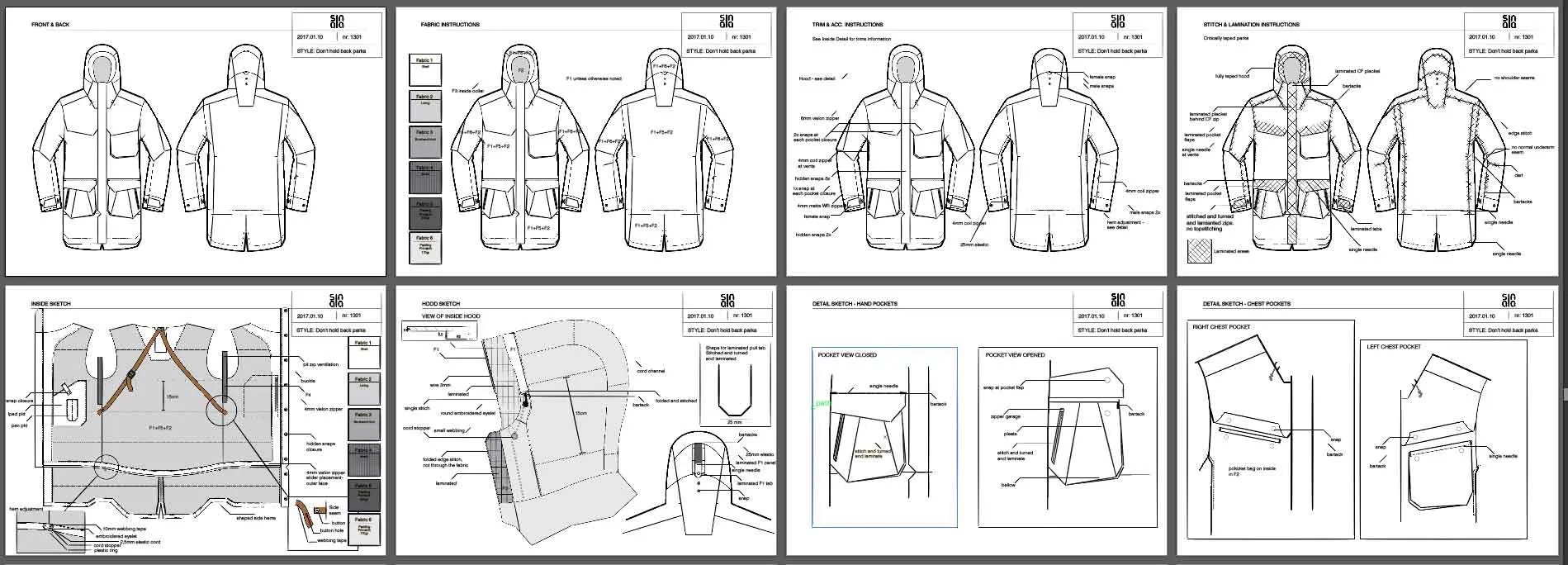
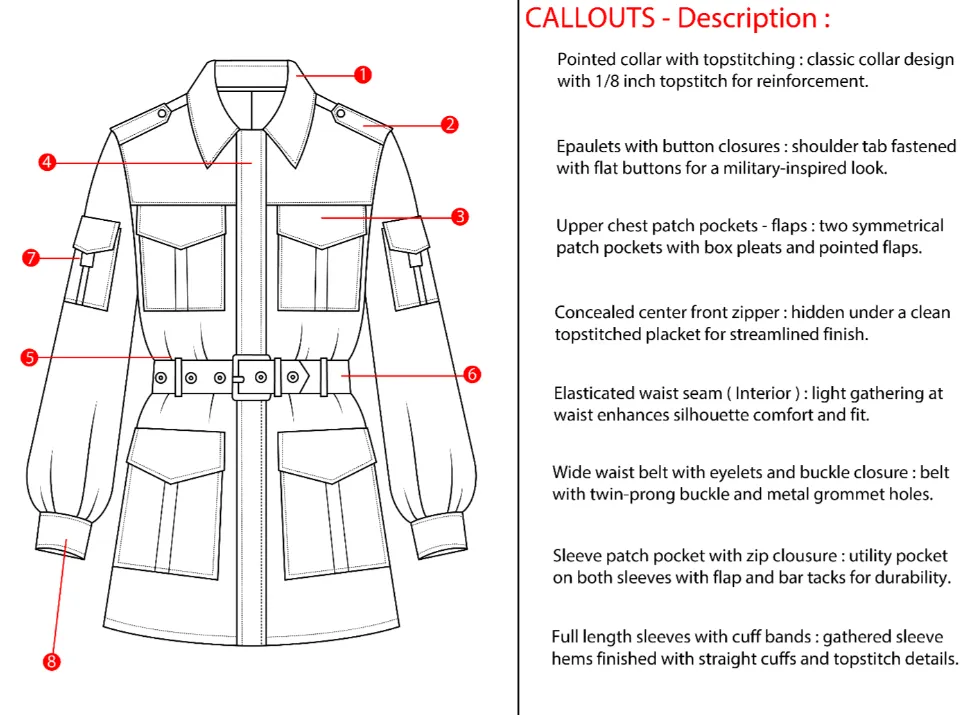
1. Technical Flats & Callouts
A tech pack never uses stylized, artistic fashion illustrations. It uses "flats"—2D black-and-white vector drawings (usually created in Adobe Illustrator) that show the garment laid completely flat.
You must include views of the front, back, sides, and the inside (if the garment is lined). Every single construction detail—pockets, darts, topstitching, and hardware—must have a "callout" line explaining exactly what it is.
2. Bill of Materials (BOM)
This is the recipe for your garment. It lists every single physical component required to assemble one unit. If an item isn't on the BOM, it won't be on the clothing.
- Fabrics: The main shell fabric, lining, and pocket bags. It must list the exact composition (e.g., 100% French Terry Cotton) and the weight in GSM (Grams per Square Meter).
- Trims & Hardware: Zippers (including the exact gauge and teeth type), snap buttons, drawstrings, eyelets, and elastic bands.
- Threads: Thread composition, thickness, and color.
- Labels: Main neck tags, care/wash labels, and size pips.
3. Points of Measure (POM) & Grading
This section defines your fit. It consists of a detailed chart listing every critical measurement on your base sample size (usually a Medium).
- POMs: Typical points include chest width (measured 1 inch below the armhole), High Point Shoulder (HPS) to the bottom hem, sleeve length, and neck opening width.
- Trims & Hardware: The mathematical formula that dictates how much the garment scales up for a Large/XL and down for a Small.
- Grading Rules:The acceptable margin of error for bulk manufacturing (e.g., allowing a +/- 0.5-inch variance on the chest width).
4. Construction & Stitching Specs
This tells the sewing floor exactly how to assemble the cut pieces.
- Seam Types: You must specify if a seam is flatlock, overlock, French, or bound.
- Stitch Per Inch (SPI):Specifying the SPI controls the quality. A higher SPI (like 12-14) means a tighter, stronger, more premium seam, whereas a lower SPI (like 8) is faster and cheaper to sew but less durable.
- Finishing:Instructions on how hems, cuffs, and raw edges are treated so they don't fray.
5. Colorways & Artwork Specifications
If your garment comes in multiple colors or features streetwear graphics:
- Color Standards: You cannot just say "Navy Blue." You must provide the exact Pantone Textile System codes (TCX or TPG) for the fabric dye.
- Print/Embroidery Placement: If you have a chest logo, the tech pack must include the to-scale artwork file and explicitly state its location (e.g., "Screenprint centered on chest, exactly 3.5 inches below the front neckline seam").
6. Folding & Packaging Instructions
The final page dictates how the garments are presented when they arrive at your warehouse. It specifies how the garment should be folded, the dimensions of the polybag, where the barcode or sizing sticker should be placed on the bag, and whether to include silica gel packets to prevent moisture damage during ocean freight.
Why do most clothing brands fail?
Posted on Jun 28, 2026 | By Perfit Company
The fashion industry is widely known as one of the most glamorous and lucrative markets in the world, generating trillions of dollars globally. Every day, thousands of passionate entrepreneurs, designers, and influencers launch new apparel lines with dreams of seeing their garments worn by celebrities or featured in high-end boutiques. Yet, the stark reality is that the vast majority of these startups will not survive past their first two years in business. If you are reading this, you are likely wondering: why do most clothing brands fail, and more importantly, how can you ensure your brand avoids becoming just another statistic?
The truth is that a successful clothing brand requires much more than just a good eye for design. It requires a deep understanding of business operations, supply chain logistics, marketing, and financial management. Many founders enter the industry blinded by their creative vision, completely unprepared for the rigorous operational demands of running an apparel company. From misjudging their target audience to mismanaging their capital, the pitfalls are numerous. Let's break down the core reasons behind these failures and explore the strategic steps you must take to build a sustainable, profitable fashion label.
The Trap of Trying to Please Everyone
Most clothing brands fail because they try to appeal to everyone. In an attempt to maximize their potential customer base, new founders often design collections that lack a cohesive identity or specific point of view. They create a few graphic tees, some generic activewear, and maybe a formal piece or two, hoping that casting a wide net will result in more sales. This is a fatal flaw in modern fashion marketing. When you try to be everything to everyone, you end up meaning nothing to anyone. Your brand message becomes diluted, your marketing budget is stretched too thin across disjointed demographics, and your products get lost in a sea of generic apparel.
Instead, focus on a specific niche and build a loyal customer base. The most successful modern brands launched by dominating a very specific micro-niche. Whether it is sustainable activewear for pregnant women, heavy-weight oversized streetwear for skaters, or minimalist office wear for remote workers, a defined niche allows you to speak directly to a specific consumer's pain points and desires. A hyper-focused approach makes your marketing more efficient, allows you to charge a premium price, and fosters a community of passionate brand evangelists who will champion your products to others.
The Manufacturing Nightmare: The #1 Reason Brands Collapse
While poor marketing and lack of a niche are significant hurdles, they are survivable. But most of them fail because of not finding a good manufacturer. The supply chain is the absolute backbone of any physical product business. You can have the most brilliant designs, a massive social media following, and a perfectly optimized website, but if you cannot produce your garments reliably, to the correct specifications, and on time, your business will cease to exist.
Because of less or almost no experience, they find an unreliable or untrusted manufacturer and just get scammed and lose their money and time and then they just give up on their dream of starting a clothing brand. And get disheartened! The manufacturing landscape, particularly overseas, is incredibly opaque for newcomers. It is filled with middlemen posing as direct factories, facilities that lack proper quality control infrastructure, and outright scammers who will take a hefty 50% deposit and simply disappear.
Even if a founder avoids outright scams, they often fall victim to "bait and switch" tactics. This occurs when a manufacturer produces a flawless, high-quality prototype (the "golden sample") to win the contract. However, when the final bulk order of 1,000 units arrives months later, the fabrics are cheaper, the stitching is crooked, and the sizing is wildly inconsistent. When an early-stage startup sinks its entire operating budget into a defective production run, the financial blow is usually fatal. They are left with unsellable inventory, angry customers demanding refunds, and no capital to fund a second run.
Why the Right Production Partner is Your Greatest Asset
Finding a reliable manufacturer is crucial for the success of your clothing brand. A true manufacturing partner does not just sew fabric together; they act as an extension of your own business. A good manufacturer can help you produce high-quality products, meet deadlines, and provide support throughout the production process. They will offer technical advice on your "tech packs" (technical design blueprints), suggest fabric alternatives that might improve drape or reduce costs, and push back if you request a construction method that will negatively impact the garment's durability.
A premium manufacturing partner will also have strict, transparent quality control (QC) protocols in place. They will perform inline inspections during the sewing process and final inspections before the goods are packed for freight. They understand that their reputation is intrinsically tied to yours. On the other hand, a bad manufacturer can lead to delays, poor quality, and ultimately, the failure of your brand. A delayed shipment of winter coats arriving in late March can bankrupt a seasonal brand. Inconsistent sizing can lead to return rates of over 40%, which will instantly consume your profit margins in reverse logistics and shipping fees.
How to Vet and Secure a Trusted Manufacturer
To avoid this, do thorough research, ask for samples, and communicate clearly with potential manufacturers before committing to a partnership. Never rush the vetting process. Start by interviewing potential factories as if you were hiring a C-level executive for your company. Ask about their Minimum Order Quantities (MOQs), their maximum capacity, their ethical compliance certifications, and their typical lead times for both sampling and bulk production.
Always ask to see physical examples of their past work before paying for your own custom prototype. This allows you to audit their baseline stitching quality and finishing techniques. Furthermore, communication is the ultimate filter. If a factory takes a week to reply to a simple email during the introductory phase, imagine how difficult it will be to get an update from them when your $20,000 production order is three weeks delayed. Clear, rapid, and transparent communication is the hallmark of a professional apparel manufacturer.
By finding the right manufacturer, you can ensure that your clothing brand has a solid foundation for success and growth in the competitive fashion industry. When you don't have to worry about whether your zippers will break or your seams will rip, you can focus 100% of your energy on what actually drives revenue: marketing, brand building, and customer acquisition.
The Delusion of "Overnight Success"
Another massive trap that new founders fall into is thinking of overnight success: Some people think that they will get overnight success without putting in the work and effort. We live in an era of social media where it looks like new brands explode out of nowhere, selling out their inventory in minutes. What the highlight reel doesn't show are the years of failed prototypes, the maxed-out credit cards, the late nights packing orders in a garage, and the relentless grind required to build that initial momentum.
But the truth is that building a successful clothing brand takes time, dedication, and hard work. It requires consistency in posting content, patience in building an email list, and resilience when your first launch inevitably doesn't go as planned. Many founders give up after three months because they aren't generating thousands of dollars in daily revenue. It's important to set realistic expectations and be prepared for the challenges that come with starting and growing a brand. Fashion is a marathon, not a sprint.
Financial Mismanagement and Poor Pricing Strategies
Beyond manufacturing and mindset, financial illiteracy is a silent killer in the apparel industry. Many new brand owners do not understand how to properly price their garments. They look at their competitor's prices, look at their own manufacturing cost (Cost of Goods Sold, or COGS), and randomly pick a number in between. They completely forget to account for hidden costs: freight shipping from the factory, import duties and customs taxes, packaging materials, credit card processing fees, warehouse storage, and customer acquisition costs (the cost of running Facebook or TikTok ads).
Because they fail to calculate their true landed cost and gross margin, they end up actually losing money on every single item they sell. A standard rule of thumb in the fashion industry is that your retail price should be roughly 4 to 5 times your manufacturing cost. If you underprice your garments to "be competitive," you will not have enough margin leftover to reinvest in marketing or to fund your next, inevitably larger, production run. Cash flow management—knowing exactly when money is coming in versus when deposits are due to your factory—is the lifeblood of your survival.
Weak Branding and Ignoring Community
Finally, many clothing brands fail because they confuse a "clothing brand" with a "merchandise business." Slapping a generic logo on a blank, wholesale hoodie does not make you a fashion brand. A true brand has an ethos, a story, and a cultural viewpoint. People do not buy clothes just to cover their bodies; they buy clothes to signal to the world who they are, what they value, and what community they belong to.
If your marketing strategy relies entirely on running discount ads to cold audiences, you will be eaten alive by rising advertising costs. The brands that survive and thrive are the ones that prioritize community building. They host pop-up events, they collaborate with micro-influencers who genuinely align with their niche, they tell the story behind their design process, and they engage in two-way conversations with their customers. They create a world that people want to be a part of, making the clothing simply the uniform of that community.
Building a Lasting Legacy in Fashion
Starting a clothing brand is an incredible journey that can lead to immense personal and financial freedom, but it is not a get-rich-quick scheme. The graveyard of failed fashion startups is filled with founders who tried to appeal to everyone, trusted the wrong manufacturing partners, misunderstood their finances, and expected overnight riches.
To succeed, you must do the exact opposite. Carve out a highly specific niche and serve them relentlessly. Treat the search for a clothing manufacturer as the most important business decision you will make, prioritizing reliability, communication, and quality over finding the absolute cheapest unit price. Master your profit margins, and understand that brand building is a long-term play that requires immense patience and resilience. By laying down this strategic groundwork, you elevate yourself from an amateur trying to sell shirts to a real business owner building a legacy brand.
If you are starting a new brand and need any type of help you can contact us via our social media and you can also read our blogs for more insights and tips on how to start a clothing brand and how to find a good manufacturer.
FOR ANY TYPE OF QUERY OR SUPPORT YOU CAN CONTACT US VIA OUR SOCIAL
MEDIA OR FILL OUT THE CONTACT FORM.
CONTACT US.